
Personal Safety Training: Simple Skills That Work in Everyday Life
Practical personal safety habits for home, in the car, in crowds, and outdoors, plus what beginners can expect from a personal safety class.
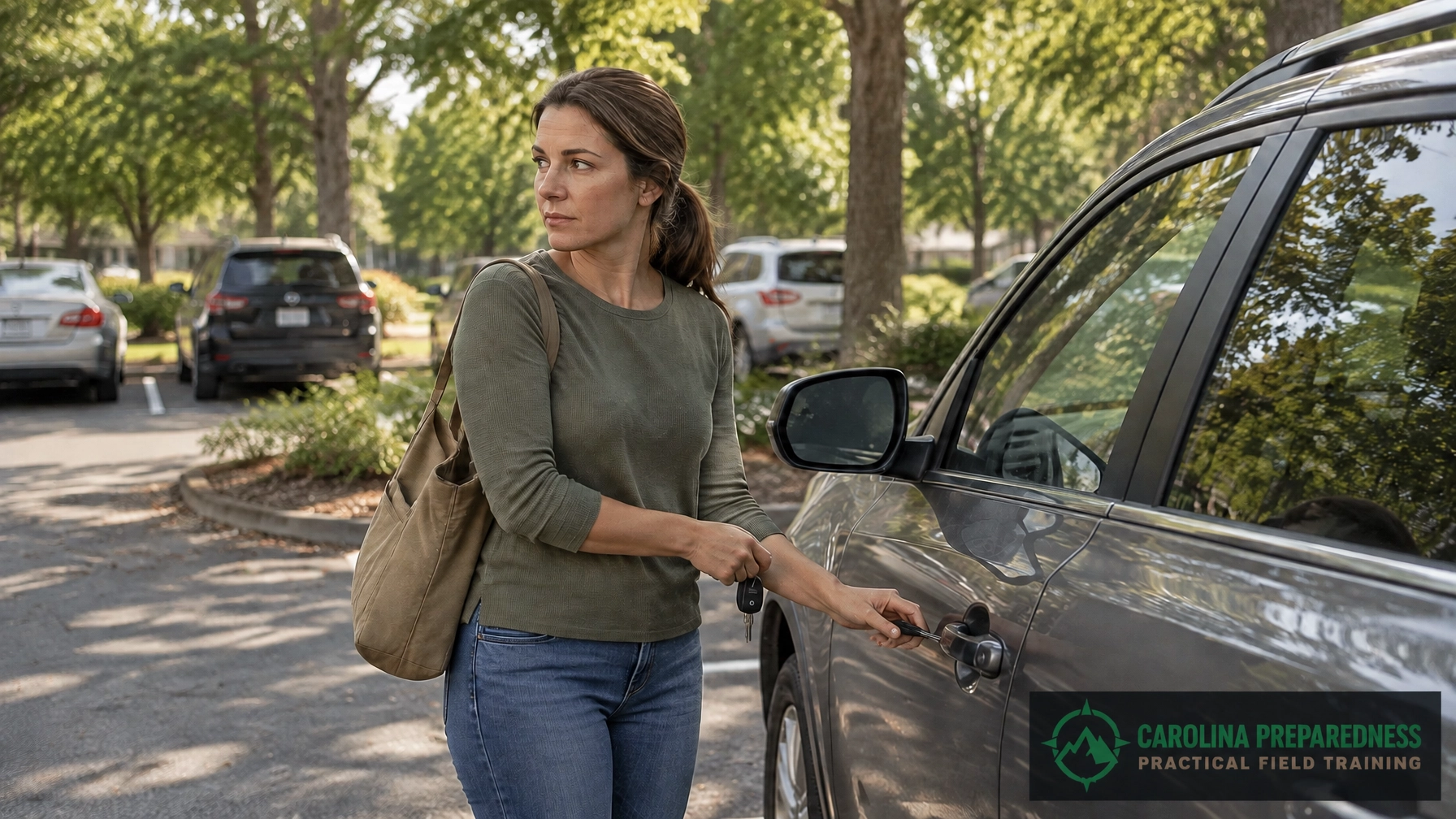
Personal safety is not about expecting trouble everywhere. It is about noticing what is around you, making simple plans, and choosing a safer option when something feels off. These habits can fit into ordinary routines at home, in a car, in a crowd, or outdoors.
Good personal safety training gives beginners a clear way to practice those habits without fear-based messaging or a focus on tactical skills. The aim is practical confidence, not constant worry.
Start with awareness, not alarm
Situational awareness means paying enough attention to your surroundings to make useful choices. It does not mean studying every person or treating unfamiliar people as threats.
A simple habit is to pause when you arrive somewhere new. Notice the main entrance, another way out, and where you could go for help, such as a staffed counter or security desk. Keep your phone use from taking all your attention, especially while walking through a parking area or entering a building.
You do not need to memorize a complicated system. Try asking yourself:
- Where am I, and what is changing around me?
- If I needed help, where could I go?
- Is there an easy choice that would give me more space or time?
If you feel uncomfortable, you do not need to prove that your concern is justified. You can leave, move toward other people, or ask staff for help. Awareness is a prompt to make a sensible choice, not a reason to assume the worst.
At home: make a plan your household can use
Home safety starts with ordinary steps. Check that doors and windows close and lock as intended. Keep outdoor entrances reasonably well lit. Decide how household members will contact one another if plans change or someone needs help.
It also helps to agree on a meeting place and a way to share important information. For broader emergencies, Ready.gov’s household planning guide suggests discussing alerts, shelter, evacuation routes, communication, and supplies, then practicing the plan.
Keep the plan short enough to remember. For example: who contacts whom, where to meet, and what to do if the usual plan is not possible. Review it when household members’ routines change.

In the car: build a few repeatable habits
Parking lots and driveways can be busy and distracting. Before you get to your vehicle, have your keys accessible and take a moment to notice the area around it. When you get in, lock the doors and put away items that could draw attention.
If you are driving, keep your attention on the road. If you feel unsafe while parked or stopped, prioritize creating distance and getting to a busy, staffed place when it is safe to do so. Call emergency services if there is immediate danger.
A plan is more useful than a perfect prediction. Think through where you could go for help on a regular route and how you would contact someone if your plans changed. Carolina Preparedness offers a Vehicle and Firearms course for people seeking vehicle-specific instruction; check its details to see whether it fits your experience and training goals.
In crowds: know your exits and meeting point
At a concert, festival, store, or other busy location, take a moment to notice how you would leave. If you are with other people, agree on a meeting point in case you get separated and make sure everyone knows how to contact the group.
Keep your belongings secure and follow instructions from venue staff or emergency officials. If you notice something concerning, report it to staff or security rather than investigating it yourself. CISA’s crowded-places safety guidance offers additional advice for public events.
The goal is not to scan every face. It is to know where help and exits are, stay connected with your group, and respond to clear information.
Outdoors: make your route and check-in simple
Before a walk, hike, or trip to an unfamiliar area, check the route and local conditions. Tell someone where you plan to go and when you expect to return. Bring a charged phone, and consider what you would do if your route changed or you needed help.
When you are out, stay aware of trail markers and your surroundings. If you feel uncertain about continuing, turn back or choose a familiar route. The Carolina Preparedness course catalog includes outdoor skills training, such as map reading and land navigation, that can support safer trips.

Practice calm, clear responses
Small actions can make it easier to respond under stress. Practice saying “No, thank you” in a firm voice, moving toward a staffed place, and calling someone you trust. With family or friends, talk through simple plans for meeting up or getting help.
Training should make time for questions and practice, not just information. A review of 95 worker-safety studies found that training with active participation, practice, and feedback was generally more effective for learning than passive approaches alone. The research was about workplace safety, so it does not prove the effect of a personal-safety class, but it supports the value of learning by doing. Read the study.
What to look for in personal safety training
A beginner-friendly class should explain the skills in plain language and leave room for questions. Look for instruction that covers prevention, awareness, communication, and practical choices across everyday settings. A useful class should also be clear about what it does not teach; personal safety is broader than firearms or physical defense.
Carolina Preparedness’ NRA Refuse To Be A Victim® seminar is a non-firearms personal-safety course. Its listed topics include home security, situational awareness, vehicle and travel safety, workplace safety, and personal technology. The course is designed for people who want to build a personal safety strategy for daily life.
Carolina Preparedness emphasizes small class sizes and beginner-friendly instruction. Lead instructor Forrest Garvin has more than 25 years of teaching experience and has trained over 2,000 students across the Carolinas. You can learn more about the instructor.

Personal safety training will not remove every risk or guarantee a particular outcome. It can help you think through ordinary situations, practice simple choices, and feel more prepared to respond.
Browse the Firearms & Personal Safety courses and check upcoming classes when you’re ready.
Excerpt: Practical personal safety habits for home, in the car, in crowds, and outdoors, plus what beginners can expect from a personal safety class.
SEO title: Personal Safety Training: Simple Everyday Skills
Meta description: Learn calm, practical personal safety habits for home, driving, crowds, and outdoor activities, and find beginner-friendly training in the Carolinas.
Focus keyword: personal safety training
Featured image alt text: Everyday driver checking her surroundings before getting into her car, with the Carolina Preparedness logo.
Tags: personal safety training, situational awareness, beginner safety, home safety, vehicle safety, Carolina Preparedness
Related articles
 Preparedness
Home Security Fundamentals: Hardening Your Perimeter Before the Crisis Hits
A practical, layered system for improving home security before a crisis. Inspect your perimeter, remove vulnerabilities, harden entry points, improve lighting, and practice with your household.
 Preparedness
When the Tap Runs Dry: What the Minnesota Water Facility Hacks Mean for Your Family's Survival
Discover what the coordinated cyberattack on Minnesota water systems reveals about critical infrastructure security and how to build personal water resilience.
 Preparedness