
When the Tap Runs Dry: What the Minnesota Water Facility Hacks Mean for Your Family's Survival
Discover what the coordinated cyberattack on Minnesota water systems reveals about critical infrastructure security and how to build personal water resilience.
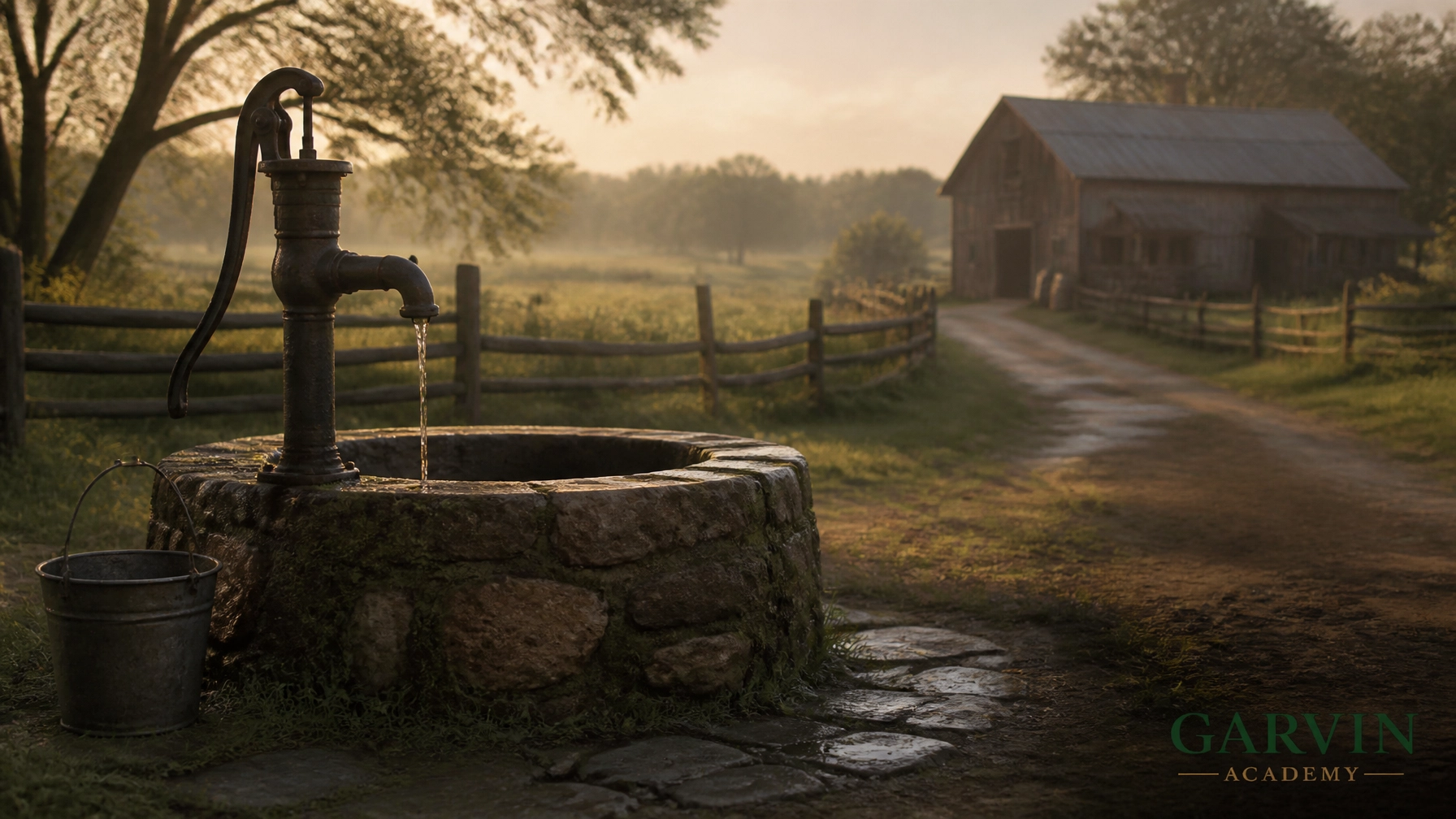
Late last month, headlines broke across the country regarding a coordinated cyberattack targeting more than thirty municipal and community water systems across Minnesota. Operational technology systems, programmable logic controllers, and automated telemetry networks were deliberately compromised. While swift manual interventions by local public works crews prevented catastrophic failures and safeguarded drinking water quality, the incident served as a stark wake-up call.
When municipal infrastructure is targeted by malicious actors, the average citizen possesses zero control. You cannot log into the local water treatment facility to patch the software. You cannot dispatch technicians to reboot offline telemetry towers. You are entirely dependent on centralized authorities and public agencies to restore basic life-sustaining services.
At Garvin Academy, our core mission has always centered on personal resilience and practical independence. Incidents like the Minnesota water facility hacks demonstrate why relying exclusively on public utility systems is a fragile strategy. To protect your family, you must build local redundancy and take active steps toward true self-reliance.
The Fragility of Centralized Public Utilities
Modern municipal water systems rely heavily on interconnected digital networks, operational technology, and automated SCADA controllers. While automation improves efficiency during normal operations, it creates a massive single point of failure. When an external threat actor manages to compromise these networks, entire communities can face sudden disruptions.
In cities like Braham, water treatment plants went completely offline, forcing local authorities to urge immediate water conservation until manual overrides could be established. In other municipalities, cellular communication links failed, leaving operators blind until they physically traveled to remote water towers and pump stations.
This vulnerability extends far beyond municipal water supplies. Power grids, fuel pipelines, and digital financial networks share the exact same systemic fragility. When you outsource your most basic survival needs to sprawling corporate and government bureaucracies, you trade your security for convenience.
Moving Beyond Emergency Preparedness to Water Security
True emergency preparedness is not about stockpiling generic supplies in a basement and hoping for the best. It is about establishing functional, repeatable capabilities that operate entirely independently of the grid.
Water security forms the absolute bedrock of any serious self-reliance plan. A human being can survive weeks without food, but only days without clean water. If municipal taps run dry: whether due to cyberattacks, severe weather, or infrastructure aging: your family needs immediate, reliable access to safe hydration.
Building this security requires a shift in mindset. Instead of assuming the city will always provide, you must assume that public infrastructure can fail without warning. By implementing localized filtration and storage solutions right now, you insulate your household from systemic shocks.

Practical Steps to Secure Your Water Supply Today
You do not need an engineering degree or a massive budget to establish robust water independence. Start with practical, tangible layers of protection:
- Maintain Emergency Water Storage: Store a minimum of one gallon of water per person per day for at least two weeks. Rotate your stored water supply every six months to keep it fresh.
- Invest in Multi-Stage Filtration: Never rely on a single water source without treatment. Equip your household with high-performance portable filters such as the Sawyer Products Squeeze Water Filtration System or the LifeStraw Personal Water Filter for emergency filtration on the go.
- Explore Rainwater Collection: If local regulations permit, install rain barrels or passive catchment systems to secure non-potable water for gardening, sanitation, and flushing.
- Identify Backup Natural Sources: Map out local rivers, lakes, or wells near your home, and ensure you have the proper purification tablets and boiling equipment to treat raw water safely.
Real action items like these transform you from a passive consumer into an independent operator. When you take control of your resources, external disruptions lose their power over you.
Connecting Water Security to Financial and Professional Independence
The lessons learned from critical infrastructure security apply directly to your economic life. Just as municipal water systems are vulnerable to external hacks, corporate employment and traditional banking systems are vulnerable to layoffs, policy shifts, and systemic economic instability.
True independence requires holistic self-reliance. You must invest in yourself by acquiring high-value, practical skills that cannot be revoked by an employer or disrupted by a server outage. Whether through mastering digital privacy, building an independent digital asset portfolio, or launching a home-based business, reducing your reliance on fragile corporate systems is the ultimate form of risk management.
When you be your own boss and create autonomous revenue streams, you gain the financial buffer needed to invest in your family's physical infrastructure. Independence is an interconnected ecosystem: financial freedom funds physical preparedness, and physical security provides the peace of mind required to build thriving independent enterprises.

Frequently Asked Questions
Did the Minnesota cyberattacks impact drinking water quality?
No. State officials, health departments, and local utilities confirmed that drinking water safety was never compromised. Operators successfully switched to manual overrides and containment protocols before any contamination could occur. However, the operational disruption itself highlighted the fragility of automated utility controls.
How much emergency water should a family store?
A standard guideline is to store at least one gallon of water per person per day for a minimum of two weeks. For a family of four, this means maintaining roughly 56 gallons of dedicated drinking water, plus additional reserves for hygiene and sanitation.
What are the best tools for purifying untreated water?
Having multiple redundancies is essential. A combination of mechanical micro-filters (like Sawyer or LifeStraw units), chemical purification tablets, and a reliable stainless-steel pot for boiling water ensures you can handle any water source safely.
How does preparedness tie into financial independence?
Both disciplines share a common goal: eliminating single points of failure. Just as water filters protect you from municipal utility hacks, independent income streams and self-custodied assets protect you from economic downturns and corporate fragility.

Final Thoughts
The cyberattacks targeting Minnesota water facilities should serve as a clear warning sign. As our critical infrastructure grows more complex, it also grows more vulnerable to malicious interference. Waiting for government agencies to completely secure these vast networks is a losing gamble.
Take charge of your household's safety today. Build your water reserves, test your filtration gear, and commit to continuous self-investment. By strengthening your personal resilience, you ensure that whatever happens to the grid outside, your family remains secure, capable, and independent.
Related articles
 Preparedness
Home Security Fundamentals: Hardening Your Perimeter Before the Crisis Hits
A practical, layered system for improving home security before a crisis. Inspect your perimeter, remove vulnerabilities, harden entry points, improve lighting, and practice with your household.
 Preparedness
he Number One Prep: Why a MAG Group Is More Important Than Gear
Discover why a Mutual Assistance Group (MAG) is the most critical asset for emergency preparedness, surpassing gear and gadgets in long-term survival.
 Preparedness
Build a 30-Day Emergency Food Supply on a Tight Budget
Prepping doesn't have to be expensive. Learn the "Deep Pantry" strategy and "Copy-Canning" method to build a 30-day food supply for your family today.