
Crypto 101: Beginner’s Guide to Digital Asset Security
Master the basics of blockchain and digital asset security. This guide covers self-custody, hardware wallets, and how to avoid common scams to protect your financial freedom.
Financial independence isn't just about how much you earn. It is about how much you control.
In a world of bank freezes and digital tracking, learning crypto is no longer optional. It is a fundamental skill for anyone who wants to be your own boss and secure their family's future.
If you are looking to invest in yourself, mastering digital asset security is the first step. This guide will walk you through the essentials of blockchain for beginners and provide the digital security tips you need to keep your wealth safe.
The Foundation: Blockchain for Beginners
Think of blockchain as a digital ledger that no one can erase.
Unlike a bank, which holds your money and grants you "permission" to use it, crypto allows for direct ownership. When you use digital assets, you are the bank. This provides immense freedom, but it also places the responsibility of security squarely on your shoulders.
At Garvin Academy, we emphasize practical skills. Our Crypto Master Course is designed to move you from theory to action. Understanding how transactions work and how to verify them is the baseline for your independence.
Not Your Keys, Not Your Coins
This is the most important rule in crypto.
If you keep your assets on an exchange like Coinbase or Binance, you don't actually own them. You own a promise from the exchange to pay you. If the exchange goes bankrupt or freezes your account, your goals are dead in the water.
Self-custody is the answer. It means you hold the private keys to your assets.

The Gold Standard: Hardware Wallets
To achieve true security, you need a hardware wallet. This is a physical device that stores your private keys offline, away from hackers and malware.
We recommend two primary options for those just starting out:
- Ledger Nano S Plus or Nano X: These devices are highly user-friendly and support a massive range of assets. You can find Ledger wallets on Amazon here.
- Trezor Safe 3: Trezor is famous for being fully open-source. It is a fantastic choice for those who prioritize transparency. Check out the Trezor line on Amazon.
Real action items for wallet setup:
- Buy direct: Only purchase wallets from the official manufacturer or their authorized Amazon storefront. Never buy a used wallet.
- The Seed Phrase: When you set up your wallet, it will give you 12 to 24 words. This is your seed phrase. If you lose this, you lose your money.
- Go Analog: Never store your seed phrase on a computer, in a photo, or in a "secure" cloud drive. Write it on paper or stamp it into metal.
Avoiding Common Crypto Scams
The crypto world moves fast, and scammers move faster. Protecting your digital identity is part of your broader strategy for privacy and security.

Keep these "no-nonsense" rules in mind:
- No "Double Your Crypto" offers: If a celebrity or "expert" on social media says they will double your Bitcoin if you send them some first, it is a scam. 100% of the time.
- Support never DMs you: Real companies like Ledger or Trezor will never direct message you on Telegram or X (Twitter) to "verify your wallet."
- Phishing sites: Always double-check the URL. Scammers create fake versions of popular exchanges to steal your login info. Use bookmarks for your frequent financial sites.
- The "Urgency" Trap: Scammers use fear to make you act without thinking. If you get a message saying your account is about to be deleted, breathe. Go to the official site directly, don't click the link in the message.
Your 5-Step Action Plan
Ready to take control? Follow this framework to get started today:
- Educate Yourself: Start with our free resources to understand the landscape.
- Get Hardware: Order a Ledger or Trezor wallet.
- Secure Your Seed: Prepare a physical location to store your seed phrase backup.
- Start Small: Buy a small amount of a major asset like Bitcoin or Ethereum and practice moving it from an exchange to your hardware wallet.
- Audit Your Security: Regularly check your passwords and ensure you have Two-Factor Authentication (2FA) enabled on all accounts. Use an app like Google Authenticator, not SMS.

FAQ: Common Concerns
Is crypto legal?
Yes, in the vast majority of countries, including the US, crypto is legal to own and trade.
What if I lose my hardware wallet?
As long as you have your 12-24 word seed phrase, you can buy a new device and recover everything. The device is just a key; the assets live on the blockchain.
Is it too late to start?
No. We are still in the early stages of digital asset adoption. The best time to start was years ago; the second best time is today.
How do I handle taxes?
In the US, crypto is treated as property. Every trade or sale is a taxable event. We recommend using software like Koinly or CoinTracker to stay compliant while maintaining your independence.
Invest in your future. Secure your assets. Be your own boss.
Excerpt: Master the basics of blockchain and digital asset security. This guide covers self-custody, hardware wallets, and how to avoid common scams to protect your financial freedom.
SEO title: Crypto 101: Beginner’s Guide to Digital Asset Security
Meta description: Learn how to secure your crypto assets with our beginner's guide. Discover hardware wallets, self-custody tips, and how to avoid common scams.
Tags: Crypto Master Course, Learning Crypto, blockchain for beginners, digital security tips, hardware wallets, Ledger, Trezor, self-custody
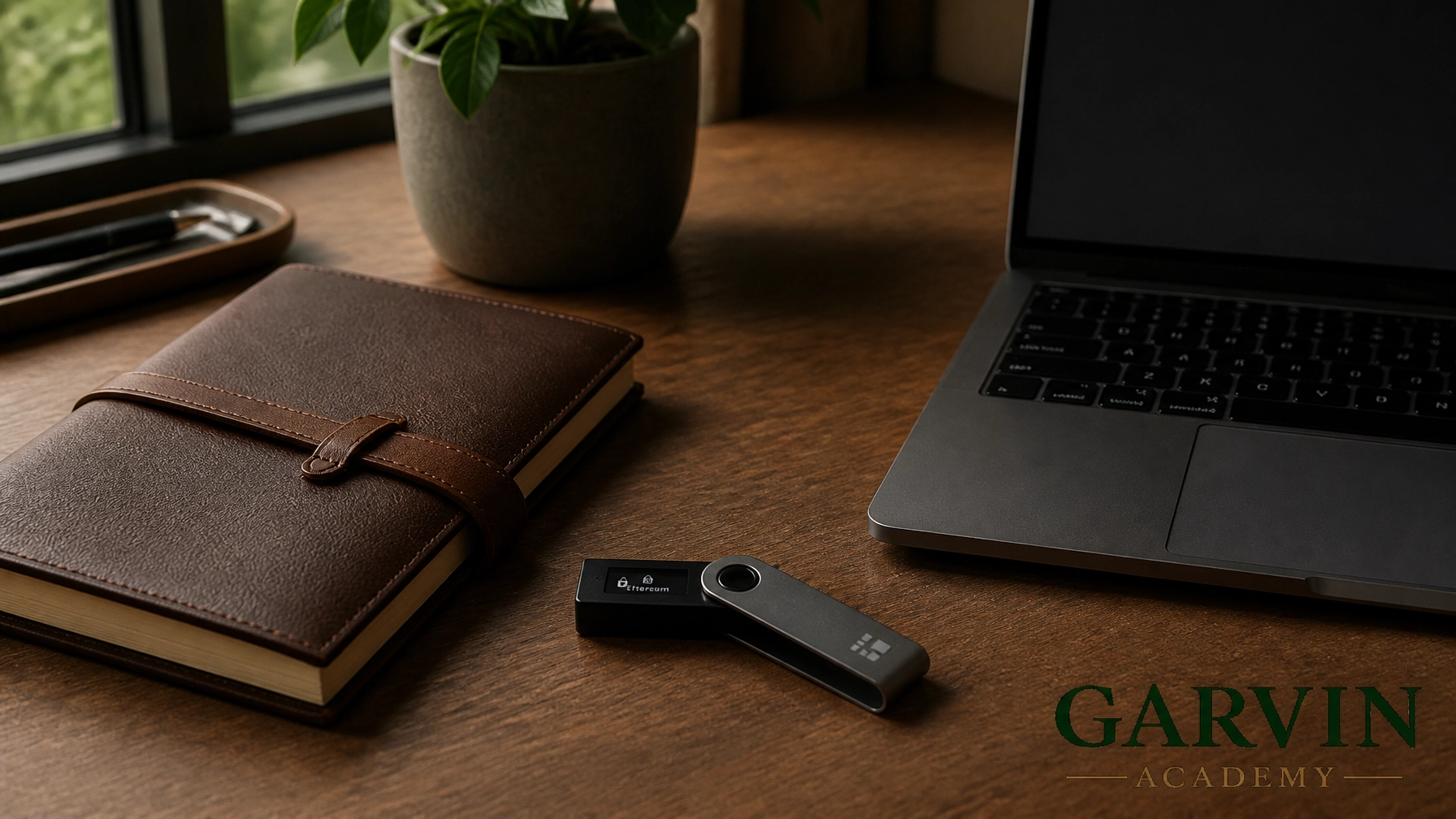
Featured image caption: A professional desk setup featuring a hardware wallet and the Garvin Academy logo, symbolizing secure digital asset management.
Category: Cryptocurrency & Digital Assets
Related articles
 Cryptocurrency / Digital Assets
Blockchain for Beginners 101: A Guide to Mastering Your Financial Independence
Master the basics of blockchain and decentralization. Learn how self-custody and hardware wallets like Ledger or Trezor can secure your financial independence and help you escape the traditional system.
 Cryptocurrency / Digital Assets
Crypto for Survival: 5 Steps to Protect Your Wealth Outside the Banks
Learn how to secure your wealth with Bitcoin and XRP. This guide covers hardware wallets, cold storage, and surviving a banking collapse.
 Cryptocurrency / Digital Assets
Seed Phrase Backup: Protect Your Crypto Recovery Phrase in 2026
Learn how to create, store, and verify a crypto seed phrase backup in 2026. Get practical steps for protecting self-custody crypto without adding unnecessary digital risk.